
A lot of people in SEO talk about "Generative Engine Optimization" like it requires special tricks. It doesn't.
When someone asks an AI tool for advice, the model searches for sources that have real editorial standards. It ignores spammy guest posts and private blog networks because it is designed to give reliable answers.
We ran real queries across the top three AI engines. Below is the breakdown of what they cited and why.
Summary of What the AI Engines Picked
| What We Asked | AI Engine | Source Cited | Origin of the Placement |
|---|---|---|---|
| "Common mock interview questions and how to answer them" | Perplexity | Harvard University (fas.harvard.edu) | Earned PR syndicated from The Muse |
| "Externship vs internship comparison for college students" | ChatGPT Search | USC & Univ. of Houston | Earned PR syndicated from The Muse |
| "What are things minimalists never have in a kitchen?" | Claude & ChatGPT | Homes & Gardens | Earned lifestyle PR feature |
| "Where do millionaires invest and avoid spending?" | Perplexity | WSOC-TV (ABC 9) | Broadcast syndication from Finder |
Test 1: Perplexity Cites Harvard 5 Times on Career Advice
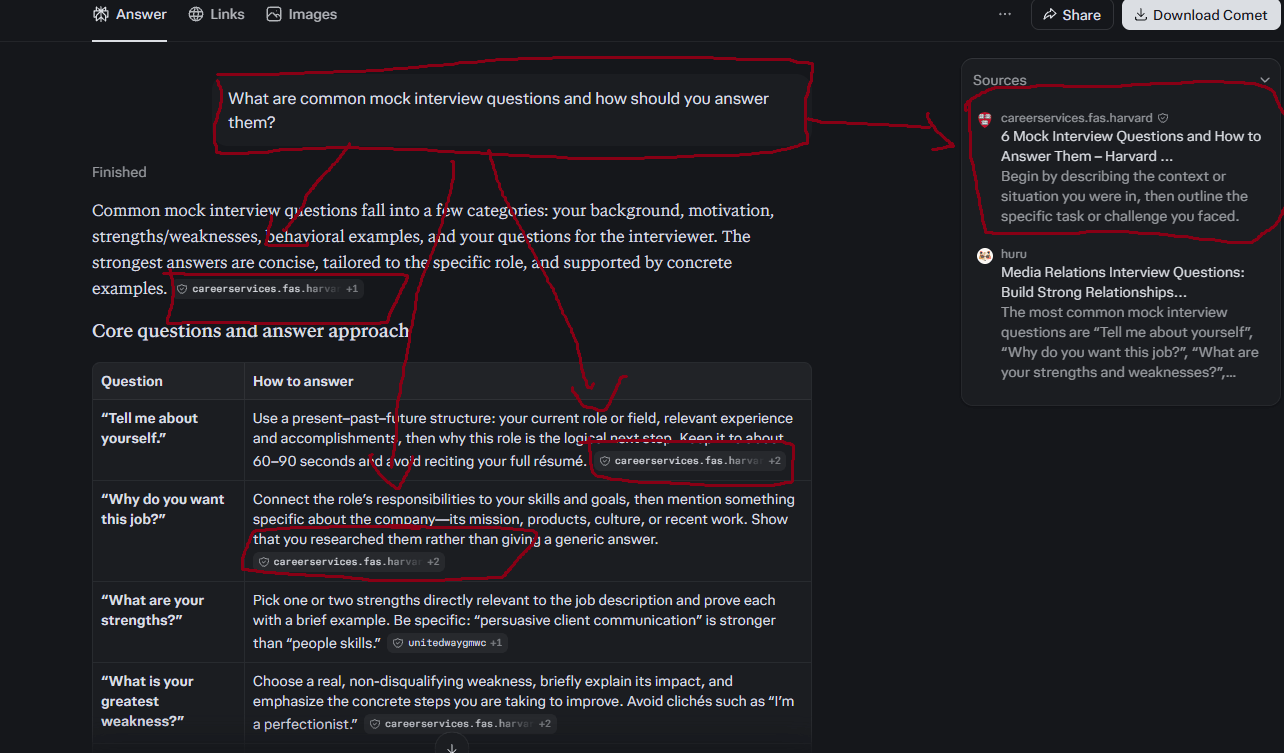
We asked Perplexity: "What are common mock interview questions and how should you answer them?"
Primary Source: Harvard University (careerservices.fas.harvard.edu)
Perplexity built its main answer table by citing Harvard University five separate times across the response.
Where it came from: This content originated from an earned editorial piece we pitched on The Muse in late 2024. The Muse syndicated the advice across its university network, and two years later, Perplexity still relies on it as the primary source.
Test 2: ChatGPT Search Cites USC and Bauer College
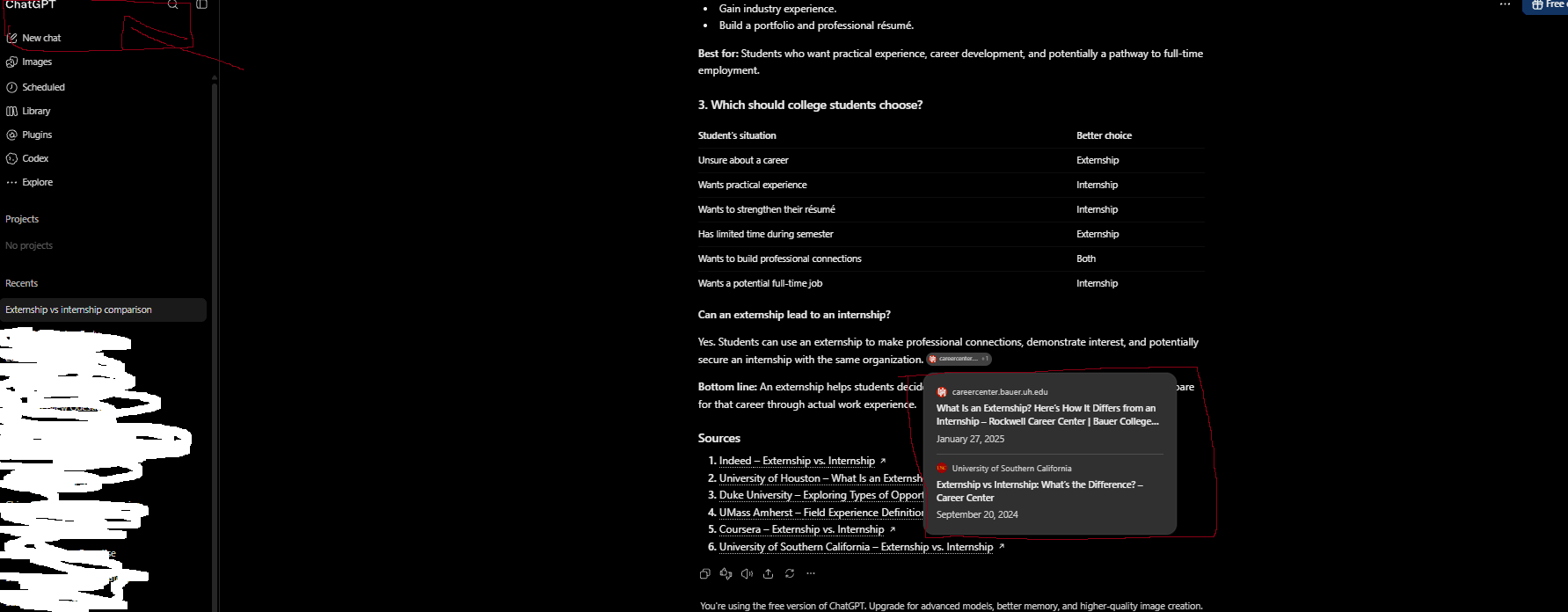
We asked ChatGPT Search: "Externship vs internship comparison for college students."
Sources: University of Southern California (USC) & Bauer UH
ChatGPT pulled directly from our syndicated placement on USC's career center and the University of Houston's Bauer College of Business.
Why this matters: Even though university pages often do not pass a standard commercial backlink, the AI treats the school's endorsement as high-trust proof. It cites the brand and the advice as fact.
Test 3: Claude and ChatGPT Both Cite Homes & Gardens
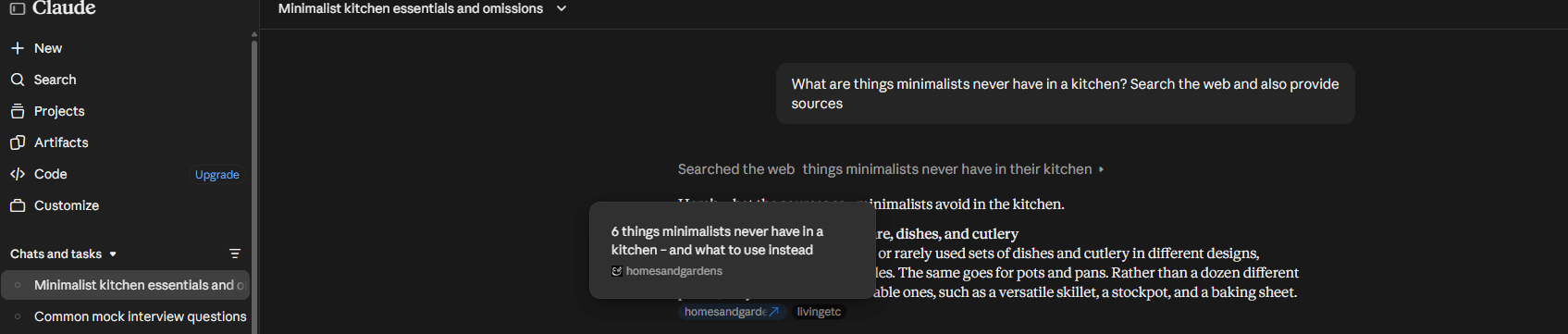
We asked Claude: "What are things minimalists never have in a kitchen?" Then we ran the same search in ChatGPT.
Source #1: Homes & Gardens (homesandgardens.com)
Claude and ChatGPT are built by two competing companies (Anthropic and OpenAI). Yet both independently pulled our single placement on Homes & Gardens as their top reference to build a 20-point checklist.
Test 4: Broadcast TV News Syndication Powers Perplexity
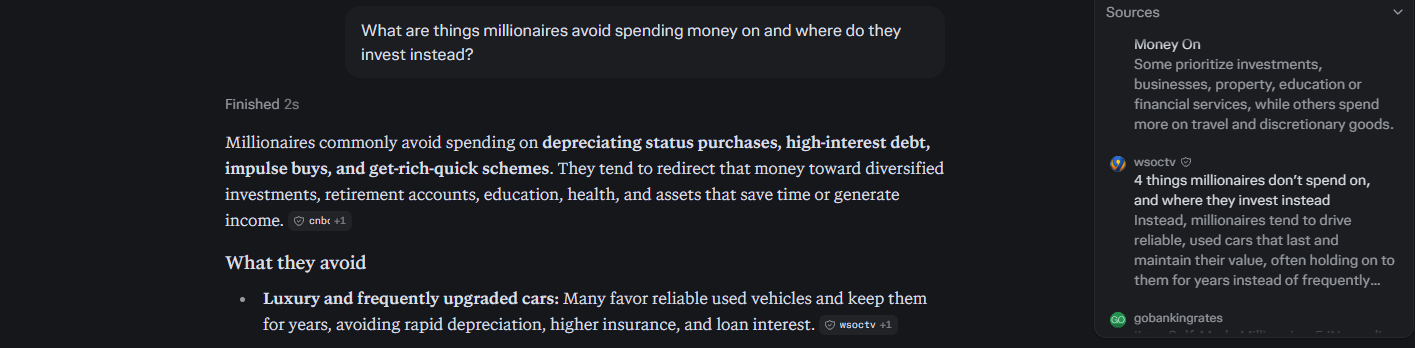
We asked Perplexity: "What are things millionaires avoid spending money on and where do they invest instead?"
Source: WSOC-TV ABC 9 (wsoctv.com)
Perplexity cited an ABC television affiliate in Charlotte, North Carolina. This story originated from an earned feature on Finder.com where our client was quoted. The story was syndicated across the news wire, and the AI picked up the television station's version.
Three Plain Lessons for Agencies and Brands
1. Cheap links are invisible to AI engines. If a site has no real editorial standards, ChatGPT, Claude, and Perplexity ignore it. You cannot game these systems with spam links.
2. Earned placements have a multi-year shelf life. The Muse and Finder placements shown above were published in late 2024. Almost two years later, AI models are still using them to answer live questions today.
3. Syndication multiplies your footprint. One placement on a major publication like Bankrate or The Muse often gets republished across dozens of TV stations and university networks. That means one pitch turns into multiple AI citations.
Want real editorial citations for your brand or clients?
We secure earned placements on DR 70+ publications under a strict fulfillment SLA. We pitch journalists directly and keep working until the contracted placements are live.